History of Arunachaleswarar Temple
What the records say: the poets who sang of Annamalai, the dynasties that built the temple over roughly a thousand years, and the inscriptions they left on its walls. For the religious legends, see Legends of Arunachala.

Timeline
| Period | What happened |
|---|---|
| 7th century CE | The Shaiva saints Appar and Thirugnana Sambandar sing of Annamalai in the Tevaram hymns |
| 9th century CE | Manikkavasagar composes the Tiruvempavai at Tiruvannamalai (tradition, recorded on Wikipedia). Present masonry dates from the Chola period |
| Around 1318 CE | Vallala Maharaja Gopuram, named after the Hoysala king Veera Ballala III (date from the official temple website) |
| 1328 CE | The Hoysalas make Tiruvannamalai a capital (Wikipedia) |
| 1336–1570 CE | Vijayanagara rule; more than a hundred inscriptions from the Sangama, Saluva and Tuluva dynasties |
| 15th century | Arunagirinathar, born in Tiruvannamalai, composes the Thiruppugazh |
| 1513–1514 CE | Eastern Rajagopuram credited to Krishnadevaraya by the official temple website |
| 16th–17th century | Thanjavur Nayaks extend the outer complex; Sevappa Nayak is linked with the Rajagopuram’s completion |
| 1896–1950 | Ramana Maharshi lives at the temple and on the hill, bringing worldwide attention |
Poets and saints in the literary record
Tiruvannamalai is a Paadal Petra Sthalam, one of the Shiva temples praised in the Tevaram, the Tamil devotional canon. Appar and Thirugnana Sambandar both sang of Annamalai in the 7th century. That means the shrine was already an important place of worship before the present buildings existed.
Manikkavasagar is traditionally credited with composing the Tiruvempavai here. It is still sung in Tamil homes and temples every Margazhi. The 15th-century poet Arunagirinathar was born in Tiruvannamalai, and his Thiruppugazh hymns to Murugan are among the best-loved works of Tamil devotional poetry. The temple’s own history page lists later works that celebrate the temple, including the Arunachala Puranam of Ellappa Navalar, the Arunai Kalambakam and the Sonasaila Malai.
The poets are covered in more depth in the blog essay The poets of Arunachala.
Builders across a thousand years
The temple grew outward. Each dynasty added a new enclosure around the older core, which is why the towers get taller as you walk from the sanctum out to the street.
Cholas
The present masonry structure dates from the Chola period, around the 9th century CE. Chola-era inscriptions record gifts of land, cattle and gold for lamps and daily worship. The official temple records attribute the Rishi Gopuram to the Chola period.
Hoysalas
In the 14th century the Hoysala king Veera Ballala III (Vallala Maharaja in Tamil) ruled from Tiruvannamalai. The official website dates the Vallala Maharaja Gopuram to around 1318. His statue stands in the fourth prakaram.
Vijayanagara
Under the Vijayanagara empire the temple received major endowments. Wikipedia lists 48 inscriptions from the Sangama dynasty (1336–1485), 2 from the Saluva and 55 from the Tuluva dynasty (1491–1570). The thousand-pillared hall is from the late Vijayanagara period. The official website credits the eastern Rajagopuram to Krishnadevaraya (1513–1514 CE).
Thanjavur Nayaks
The Nayaks of Thanjavur completed and extended much of the outer complex. Accounts summarised on Wikipedia say the Rajagopuram, begun under Krishnadevaraya, was completed by Sevappa Nayak. Where sources differ like this, we give both.
Inscriptions
The Tiruvannamalai District Administration counts about 450 stone inscriptions at the temple, along with more than a thousand sculptures. Written in Tamil and Grantha, they record endowments of land and livestock, lamps kept burning, and festivals funded by kings, officials, merchants and ordinary devotees. For historians they are a detailed record of medieval Tamil society.
Modern times
The temple is administered by the Hindu Religious and Charitable Endowments (HR&CE) Department of the Government of Tamil Nadu, which publishes official information at annamalaiyar.hrce.tn.gov.in.
In 1896 a sixteen-year-old named Venkataraman arrived in Tiruvannamalai. According to his biographers, he spent his first weeks in and around the thousand-pillared hall and the Pathala Lingam vault. He became known as Ramana Maharshi, and he lived at Arunachala until his death in 1950. His presence brought seekers from around the world, a story told on Ramana Maharshi and Arunachala.
Common questions
Who built the Arunachaleswarar Temple?
No single ruler built it. The present masonry goes back to the Chola period (9th century CE). Hoysala, Vijayanagara and Thanjavur Nayak rulers, and many private donors, added walls, halls and towers over the following centuries.
Who built the Rajagopuram?
The official temple website credits the eastern Rajagopuram to Krishnadevaraya of Vijayanagara, dating it to 1513–1514 CE. Other accounts, summarised on Wikipedia, say work began under Krishnadevaraya and was completed by Sevappa Nayak of Thanjavur.
How old is the temple?
The temple is praised in 7th-century Tevaram hymns, so a shrine existed by then. The oldest surviving stone structures are from the Chola period, around the 9th century CE.
Sources & references
- Towers (gopurams) of the templeHR&CE – Arunachaleswarar TempleOfficial temple source (HR&CE) · checked27 September 2026
- Temple history (sthala varalaru)HR&CE – Arunachaleswarar TempleOfficial temple source (HR&CE) · checked27 September 2026
- Places of InterestTiruvannamalai District AdministrationGovernment of Tamil Nadu · checked27 September 2026
- Annamalaiyar TempleWikipediaReference work · checked27 September 2026
- Ramana MaharshiWikipediaReference work · checked27 September 2026
Please verify important timings and festival dates with official sources before travelling.
This is an independent informational guide, not the official temple website. For darshan tickets, sevas and donations, use the official HR&CE temple website.
Continue exploring Arunachala
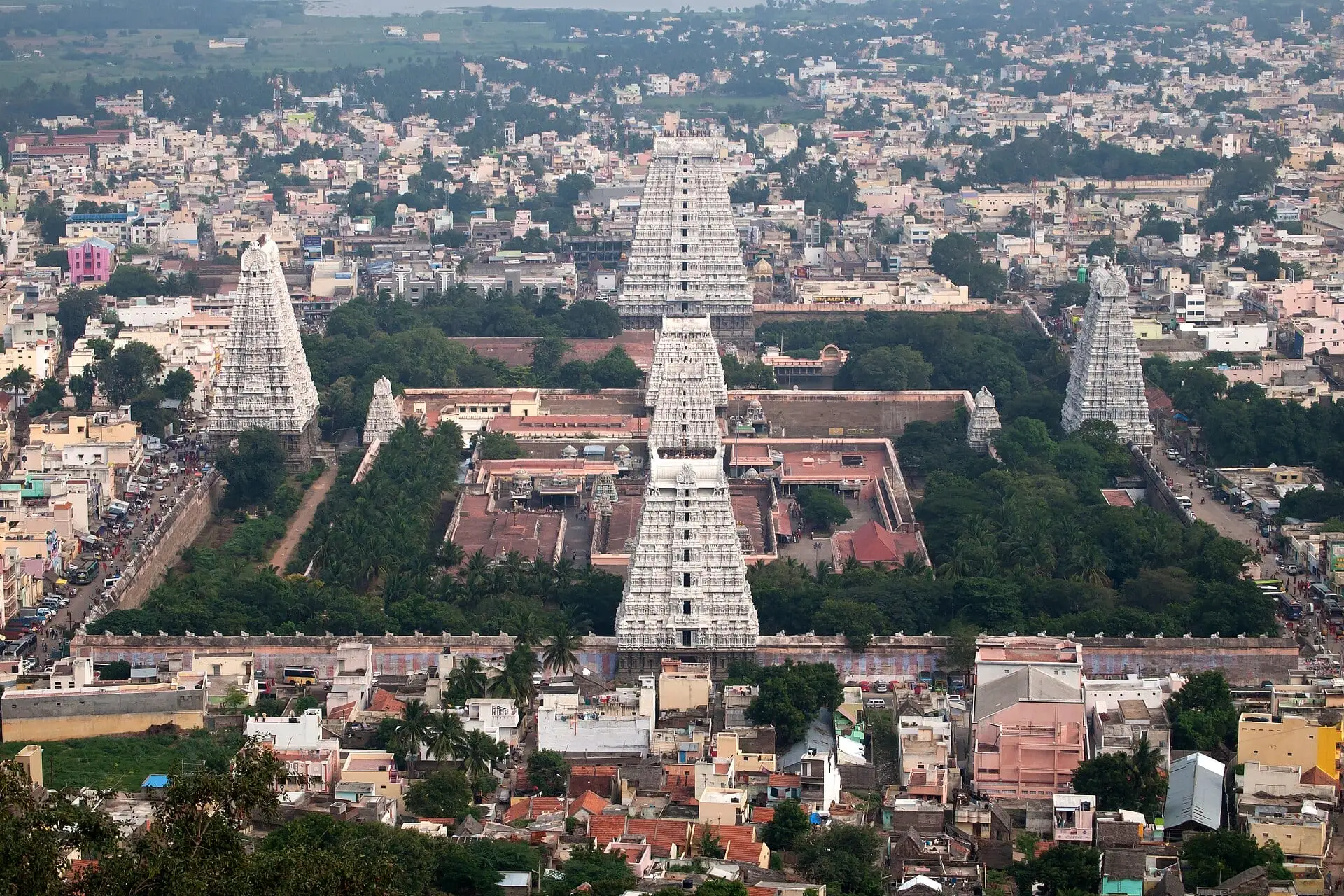 Temple guideArunachaleswarar (Annamalaiyar) Temple at the foot of Arunachala: what it is, how the complex is laid out, timings, shrines, history and how to plan a visit.
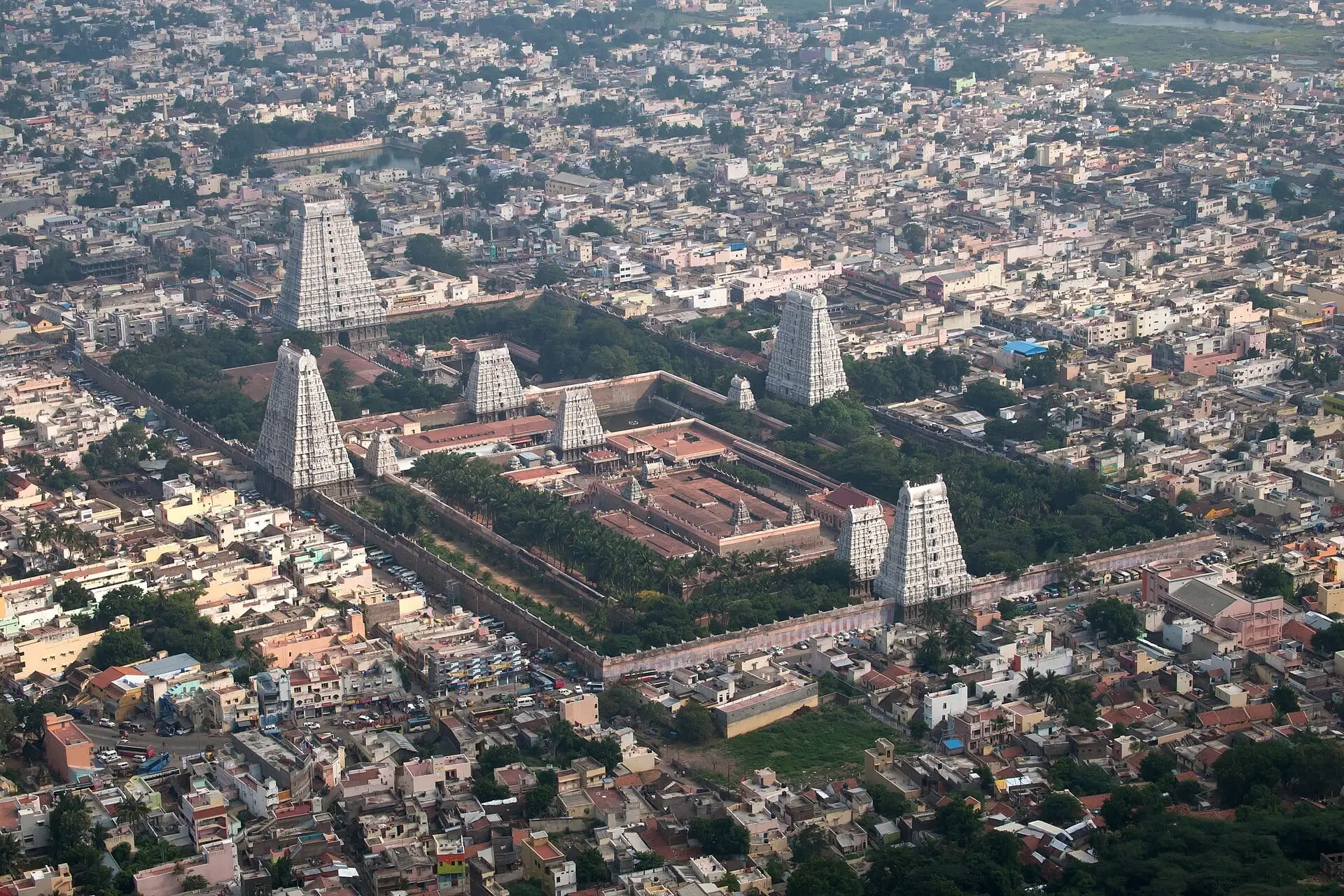 Architecture & gopuramsHow Annamalaiyar Temple is built: five prakarams, the 217 ft Rajagopuram and the other gopurams, the thousand-pillared hall, Pathala Lingam, tanks and inscriptions.
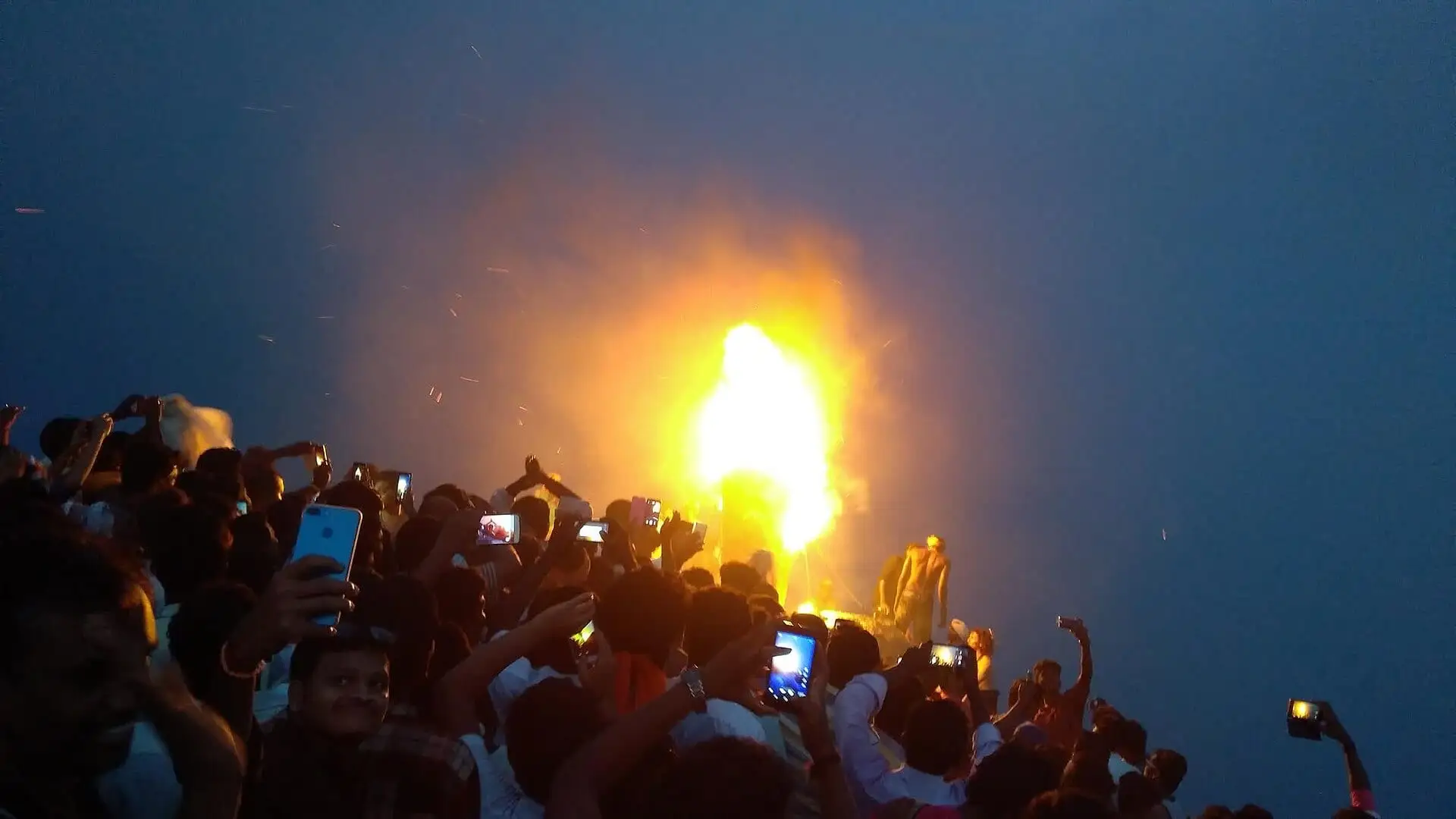 Legends of ArunachalaThe legends of Arunachala: Shiva's endless column of fire before Brahma and Vishnu, the ketaki flower, Parvati's penance and Ardhanarishvara.
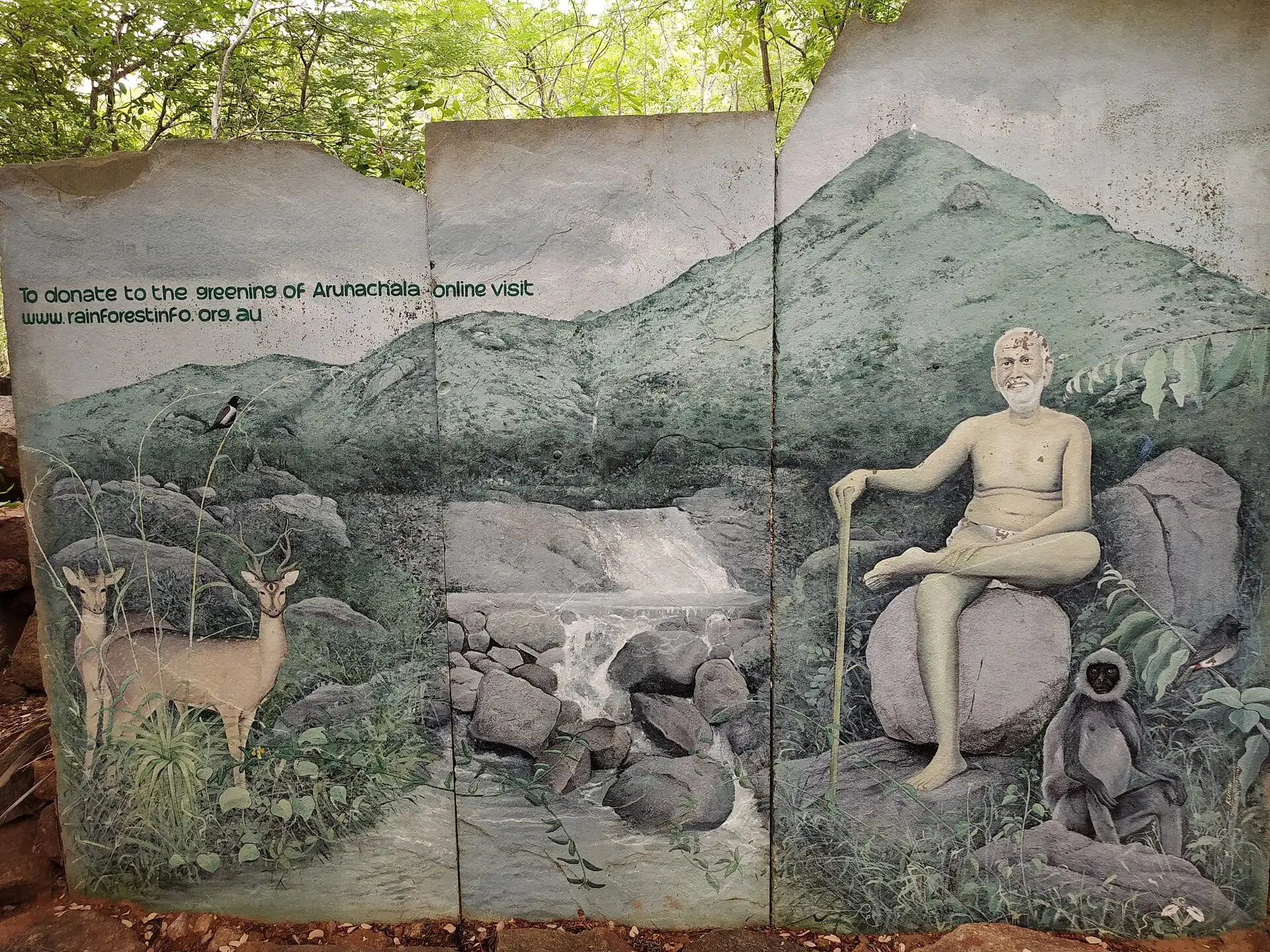 Ramana MaharshiRamana Maharshi's life at Tiruvannamalai from 1896 to 1950: the temple, Gurumurtam, Virupaksha Cave, Skandashram and Sri Ramanasramam, and how to visit each place today.