Sources and methods
Where our information comes from, how we rank sources when they disagree, and exactly how we calculate Pournami and festival dates.

How we rank sources
When sources disagree, we prefer them in this order, and where they conflict we show the disagreement rather than choosing silently:
- Official temple sources: the Arulmigu Arunachaleswarar Temple website run by the HR&CE Department.
- Government of Tamil Nadu: notably the Tiruvannamalai District Administration website.
- Institutions with first-hand knowledge, such as Sri Ramanasramam for its own ashram.
- Reference works, such as Wikipedia articles, which themselves cite published scholarship. We use them for history, and label them as such.
- Published calendars and panchangams, for dates not yet officially announced.
- Open data, such as OpenStreetMap for map positions.
We do not copy competing guide websites.
How information is labelled
- Official, Published calendars agree, Calculated, Sources differ. Every festival date carries one of these labels. See the festival calendar.
- Tradition vs history. Religious narratives are written as tradition (“according to the Arunachala tradition…”), not as historical fact. See Legends of Arunachala and temple history.
- Requires confirmation. Where official sources don’t publish a detail, such as the daily pooja schedule, we say so on the page.
How dates are calculated
Pournami windows. For each full moon we compute when the moon’s longitude moves from 168° to 180° ahead of the sun’s (the 15th tithi, Pournami). We use standard astronomical series: Meeus’s algorithms for the sun and moon, with ΔT ≈ 70 s. Times are converted to Indian Standard Time and rounded to the minute. For 2026 our start dates match the Girivalam calendar published at thiruvannamalai.in, and times typically agree with printed panchangams to within a few minutes.
Tamil months. The Tamil month of each full moon is the sidereal sign of the sun at that moment (Lahiri ayanamsa).
Festival checks. For Karthigai Deepam we check when the moon is in Krittika nakshatra at dusk during the month of Karthigai. For Maha Shivaratri we check when Krishna Chaturdashi prevails at midnight before the new moon of the month of Maasi. We use these calculations only to check published dates, or to label a date “Calculated” when nothing has been published yet.
The generator is part of the site’s source code (scripts/generate-calendar.mjs), so anyone can reproduce the numbers.
Map positions
Map markers use positions from OpenStreetMap contributors (ODbL), retrieved on 27 September 2026. They are approximate. We don’t plot places we could not find mapped, and we say so beside each map.
Weather
The pilgrim dashboard shows current weather from Open-Meteo, fetched in your browser. If the service is unavailable, the dashboard says so rather than showing a guess.
All sources
Official temple source (HR&CE)
- Arulmigu Arunachaleswarar Temple – official websiteHindu Religious & Charitable Endowments Dept., Govt. of Tamil Nadu · checked 27 September 2026
- Towers (gopurams) of the templeHR&CE – Arunachaleswarar Temple · checked 27 September 2026
- Temple history (sthala varalaru)HR&CE – Arunachaleswarar Temple · checked 27 September 2026
- Shrines of the templeHR&CE – Arunachaleswarar Temple · checked 27 September 2026
- Structures and prakaramsHR&CE – Arunachaleswarar Temple · checked 27 September 2026
- Temple tanks (theerthams)HR&CE – Arunachaleswarar Temple · checked 27 September 2026
- HR&CE e-services (donations, prasadam, tickets)HR&CE Department, Govt. of Tamil Nadu · checked 27 September 2026
Government of Tamil Nadu
- Full Moon Day (Girivalam)Tiruvannamalai District Administration · checked 27 September 2026
- Karthigai FestivalTiruvannamalai District Administration · checked 27 September 2026
- Places of InterestTiruvannamalai District Administration · checked 27 September 2026
- How to ReachTiruvannamalai District Administration · checked 27 September 2026
- Karthigai Deepam (Maha Deepam) Festival at TiruvannamalaiUtsav portal, Ministry of Tourism, Government of India · checked 27 September 2026
- TGSRTC online reservationTelangana State Road Transport Corporation · checked 27 September 2026
- APSRTC online reservationAndhra Pradesh State Road Transport Corporation · checked 27 September 2026
- TNSTC online reservationTamil Nadu State Transport Corporation · checked 27 September 2026
- National Train Enquiry SystemIndian Railways · checked 27 September 2026
Institution
- Sri Ramanasramam – official websiteSri Ramanasramam · checked 27 September 2026
- Visiting Sri RamanasramamSri Ramanasramam · checked 27 September 2026
- Etiquette around ArunachalaSri Ramanasramam · checked 27 September 2026
Reference work
- Annamalaiyar TempleWikipedia · checked 27 September 2026
- ArunachalaWikipedia · checked 27 September 2026
- Ramana MaharshiWikipedia · checked 27 September 2026
- Tiruvannamalai railway stationWikipedia · checked 27 September 2026
News report
- TSRTC to operate special buses to Arunachalam Giri PradakshinaTelangana Today · checked 27 September 2026
Published calendar
- Girivalam calendar 2026thiruvannamalai.in · checked 26 September 2026
- Karthigai Deepam 2026 datekarthigaideepam.com · checked 27 September 2026
- Arunachala Karthigai Deepam dates 2022–2031Arunachala Grace · checked 26 September 2026
- Karthigai Deepam 2027Drik Panchang · checked 26 September 2026
- Maha Shivaratri datesDrik Panchang · checked 27 September 2026
Open data
- OpenStreetMap map dataOpenStreetMap contributors (ODbL) · checked 27 September 2026
- Open-Meteo weather APIOpen-Meteo.com (CC BY 4.0) · checked 27 September 2026
- Pournami tithi calculation methodarunachalamtemple.org (see Sources page) · checked 27 September 2026
This is an independent informational guide, not the official temple website. For darshan tickets, sevas and donations, use the official HR&CE temple website.
Continue exploring Arunachala
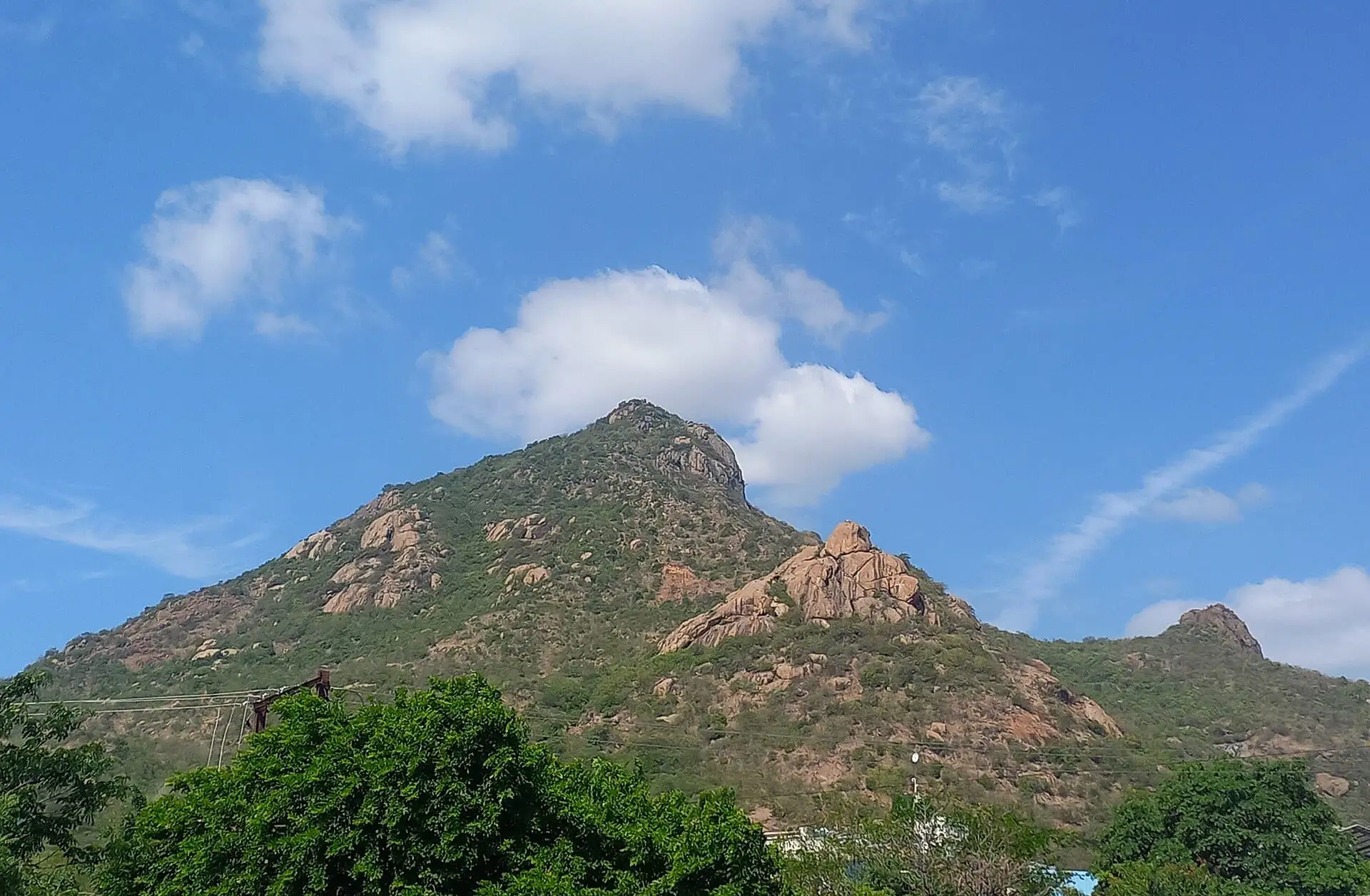 Editorial policyHow arunachalamtemple.org researches, writes, reviews and updates its guides: independence, sourcing, handling of religious content, dates, corrections and advertising.
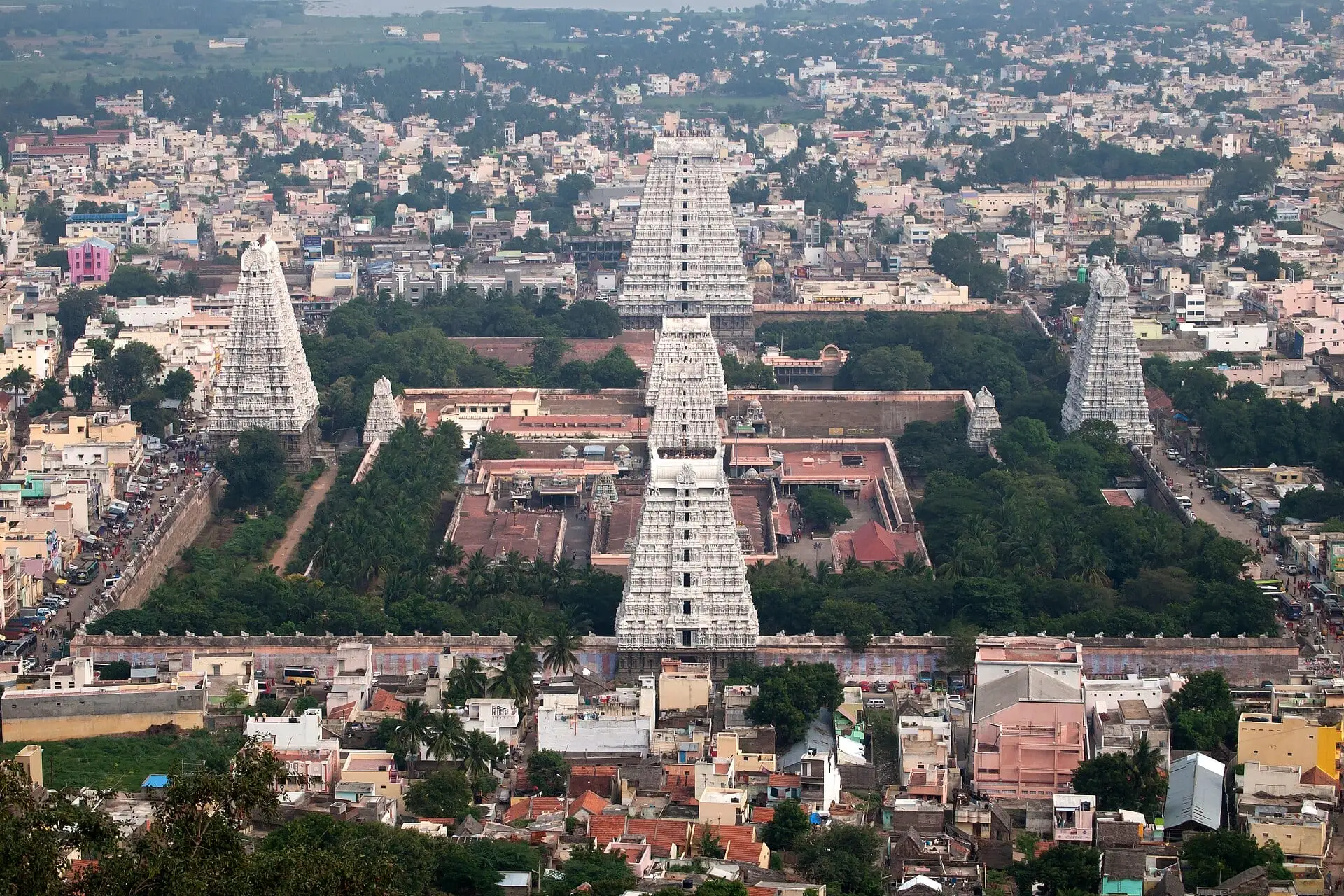 AboutAbout arunachalamtemple.org: an independent guide to Arunachaleswarar Temple, Arunachala and Girivalam. Our purpose, editorial approach, sources and update policy.
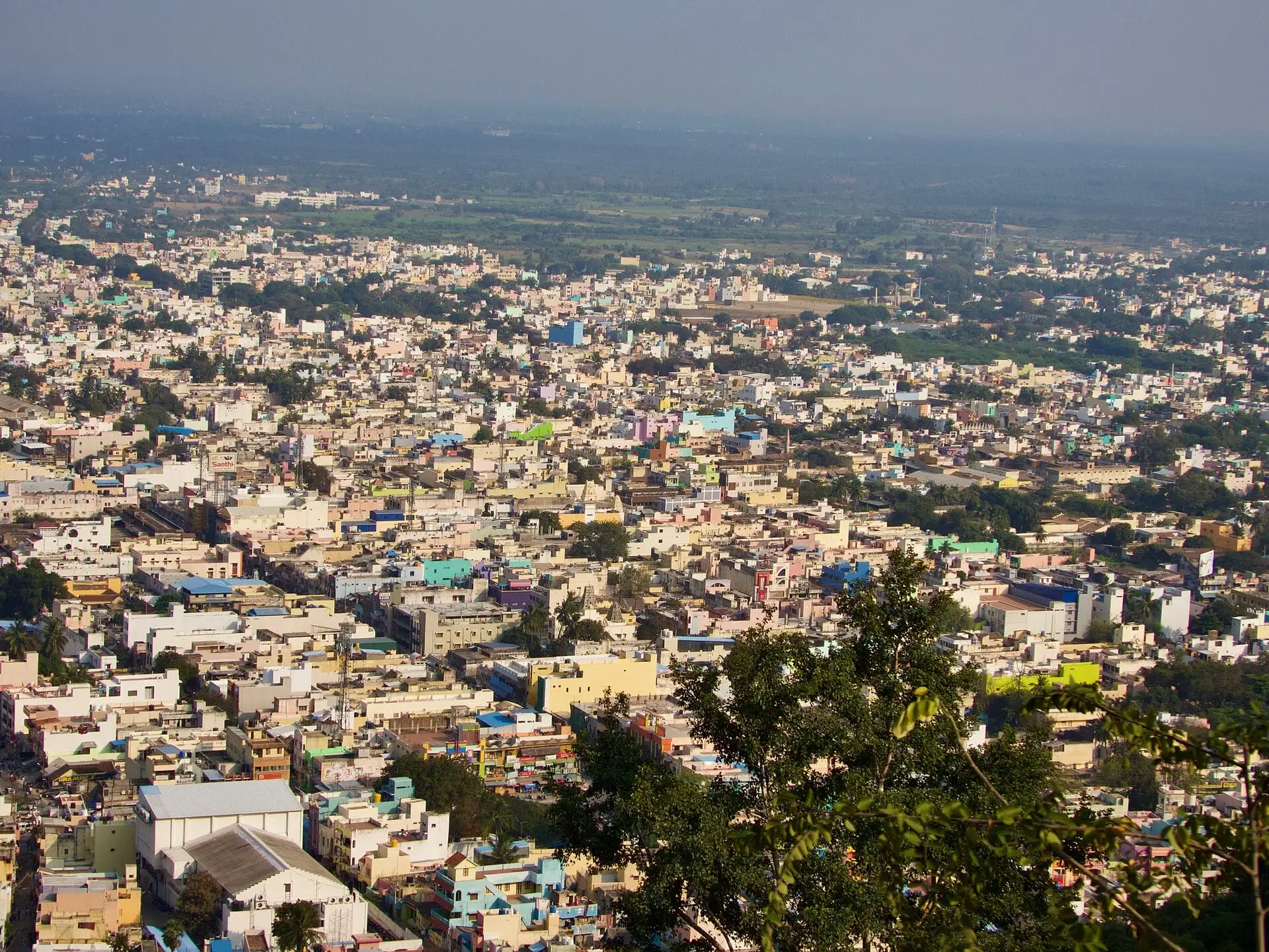 Disclaimerarunachalamtemple.org is an independent informational guide, not the official temple website. Read how to use timings, dates, maps and travel information on this site.