Legends of Arunachala
These are the stories told in the Arunachala tradition to explain why the hill and its temple are sacred. They are devotional narratives, recounted here as the tradition and the temple present them.

The column of fire (Lingodbhava)
The central legend of Tiruvannamalai is the Lingodbhava, the manifestation of the lingam.
Brahma, the creator, and Vishnu, the preserver, once argued over which of them was supreme. As they argued, a column of fire appeared between them, so vast that neither its base nor its summit could be seen. They agreed that whoever reached an end of it would be declared the greater.
Vishnu took the form of a boar (Varaha) and dug downward. Brahma became a swan and flew upward. After ages of searching Vishnu found no base and honestly admitted defeat. Brahma met a ketaki (thazhampoo) flower drifting down from the heights and persuaded it to support his false claim that he had seen the top. Shiva then emerged from the fire. He blessed Vishnu for his truthfulness and rebuked Brahma for the lie. By tradition, the ketaki is not offered in Shiva worship because it bore false witness.
The temple’s own history page puts it simply: Shiva appeared as a jothi pizhambu, a mass of light, which neither Brahma nor Vishnu could comprehend.
From fire to hill
The fire was too intense to behold, so the gods asked Shiva to take a gentler form, and he became the hill Arunachala. That is why devotees regard the hill itself as Shiva, and why the Maha Deepam is lit on its summit each year: for a few days the hill becomes a column of light again.
The same legend underlies Maha Shivaratri, when the Lingodbhava pooja is performed at midnight.
Four ages, four forms
According to the temple’s official history page, the hill has taken a different form in each age of the world: a mountain of fire in the Krita Yuga, of ruby in the Treta Yuga, of gold in the Dwapara Yuga, and of stone in the present Kali Yuga.
Parvati’s penance and Ardhanarishvara
In a second legend, Parvati playfully covered Shiva’s eyes on Mount Kailash, and in that instant the whole universe was plunged into darkness. To atone, she performed penance on earth.
The temple’s history page says Parvati performed her penance on Pavazhakundru, the “coral hill”, with the help of the sage Gautama. Shiva appeared to her as fire on Arunachala and took her into the left half of his body as Ardhanarishvara, the Lord who is half woman.
That is why the processional image of Ardhanarishvara is brought out only once a year, on the evening of Karthigai Deepam at about 6 PM, as the temple’s history page records. It is shown moments before the Maha Deepam is lit.
Remembrance of Arunachala
A saying of the Tamil Shaiva tradition names four places of liberation: to be born in Tiruvarur, to see Chidambaram, to die in Kashi, and simply to remember Arunachala. The last is said to need nothing but the thought of the hill. It helps explain why Tiruvannamalai has drawn pilgrims, poets and renunciates for so long.
Where the stories are told
- The Arunachala Mahatmyam, part of the Skanda Purana.
- The Arunachala Puranam of Ellappa Navalar, one of several works the temple’s history page cites.
- The festival itself. The district administration notes that the festival of lamps is mentioned in the Sangam anthology Akananuru and by the poet Avvaiyar.
For the poets who sang of Arunachala, see The poets of Arunachala.
Common questions
What is the story of Arunachala?
According to Shaiva tradition, Brahma and Vishnu argued over who was greater, and Shiva appeared between them as an endless column of fire. Neither could find its end. At their request Shiva took a gentler form, the hill Arunachala.
Why is the ketaki (thazhampoo) flower not offered to Shiva?
In the legend, the ketaki flower supported Brahma's false claim to have seen the top of the fire column. Tradition holds that for bearing false witness it is not used in Shiva worship.
What is the connection between Arunachala and Ardhanarishvara?
Tradition holds that Parvati completed a penance at Arunachala, after which Shiva took her into the left half of his body as Ardhanarishvara. The processional image of Ardhanarishvara is shown only on Karthigai Deepam evening.
Sources & references
- Temple history (sthala varalaru)HR&CE – Arunachaleswarar TempleOfficial temple source (HR&CE) · checked27 September 2026
- Karthigai FestivalTiruvannamalai District AdministrationGovernment of Tamil Nadu · checked27 September 2026
- ArunachalaWikipediaReference work · checked27 September 2026
Please verify important timings and festival dates with official sources before travelling.
This is an independent informational guide, not the official temple website. For darshan tickets, sevas and donations, use the official HR&CE temple website.
Continue exploring Arunachala
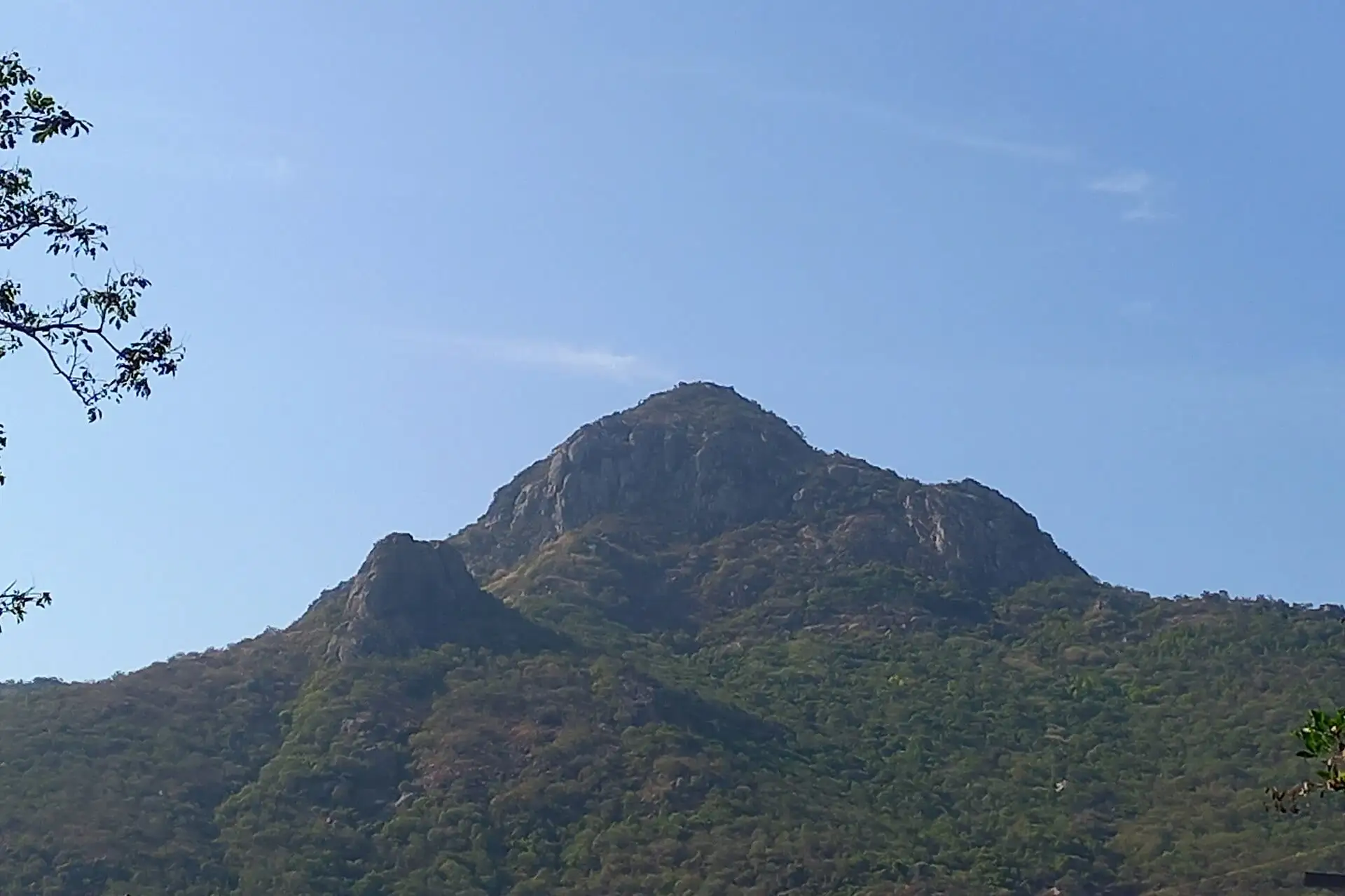 Arunachala HillArunachala, the 814 m sacred hill at Tiruvannamalai: why devotees revere it as Shiva, its caves and saints, Ramana Maharshi, Girivalam, forest rules and how to visit.
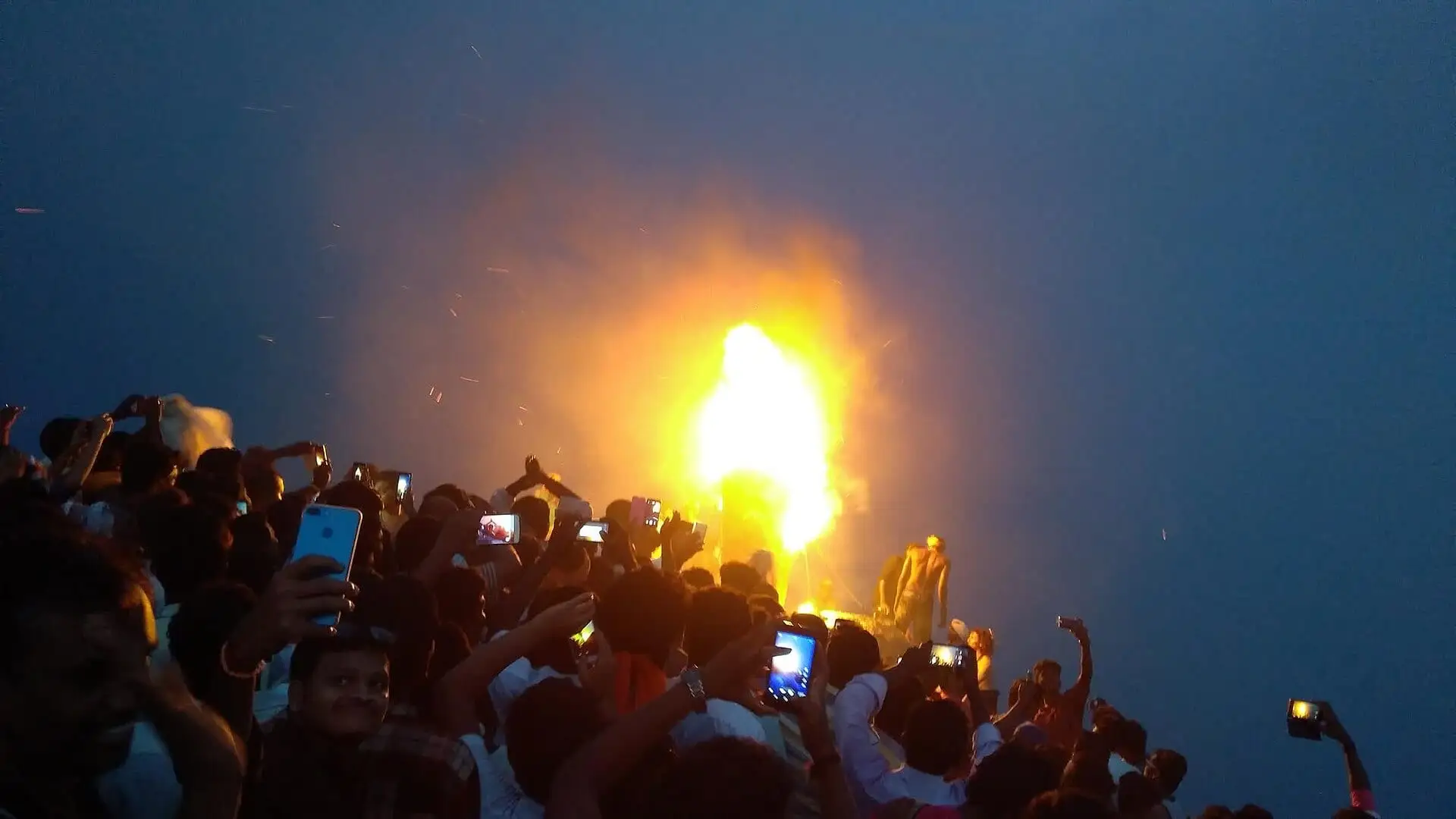 Karthigai DeepamKarthigai Deepam at Tiruvannamalai: the Bharani and Maha Deepam, the ten-day Brahmotsavam, its history, and planning for crowds, stay and viewing.
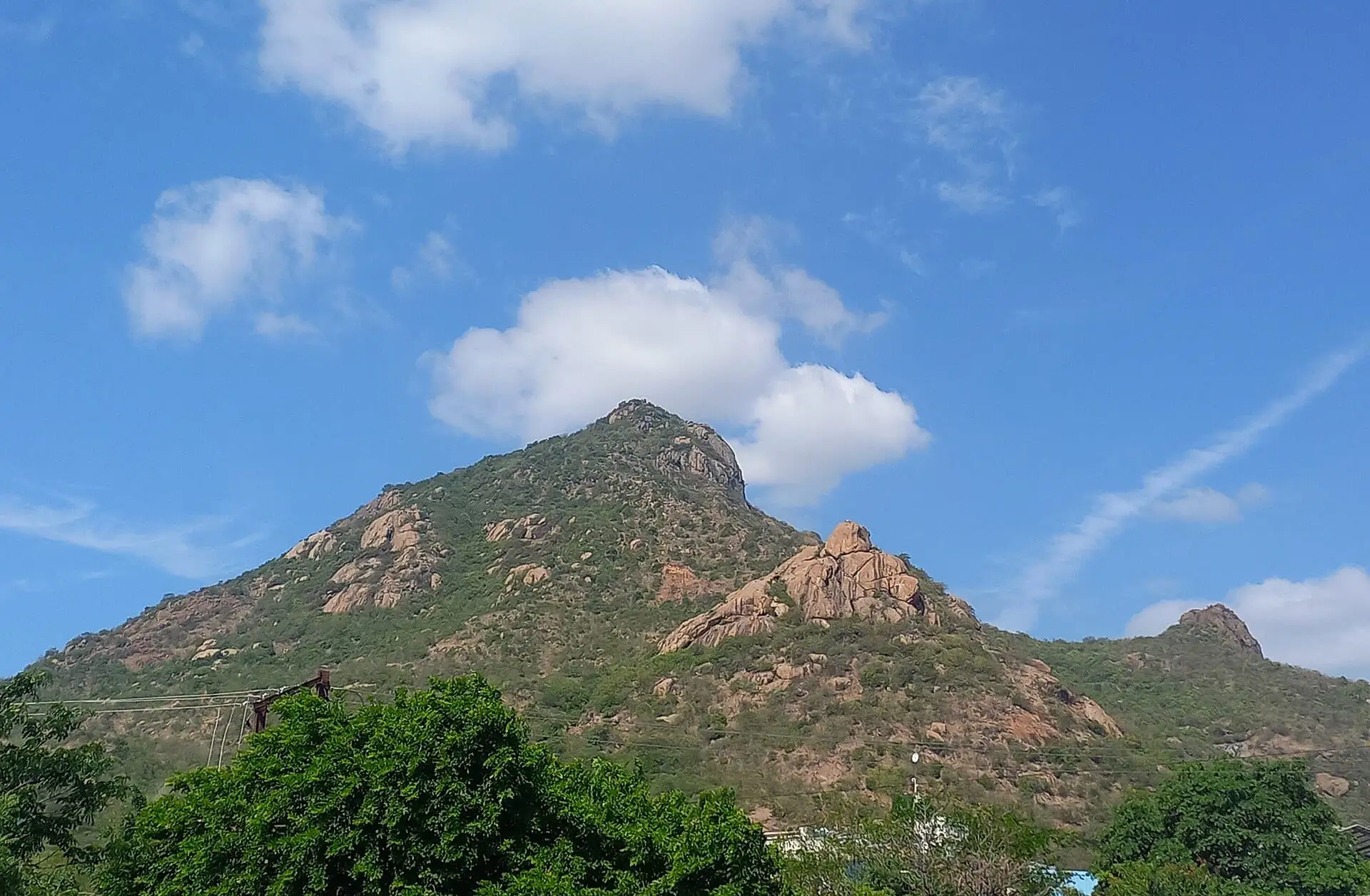 HistoryThe documented history of Arunachaleswarar Temple: Tevaram hymns, Chola masonry, the Hoysala capital, Vijayanagara and Nayak builders, inscriptions and modern times.
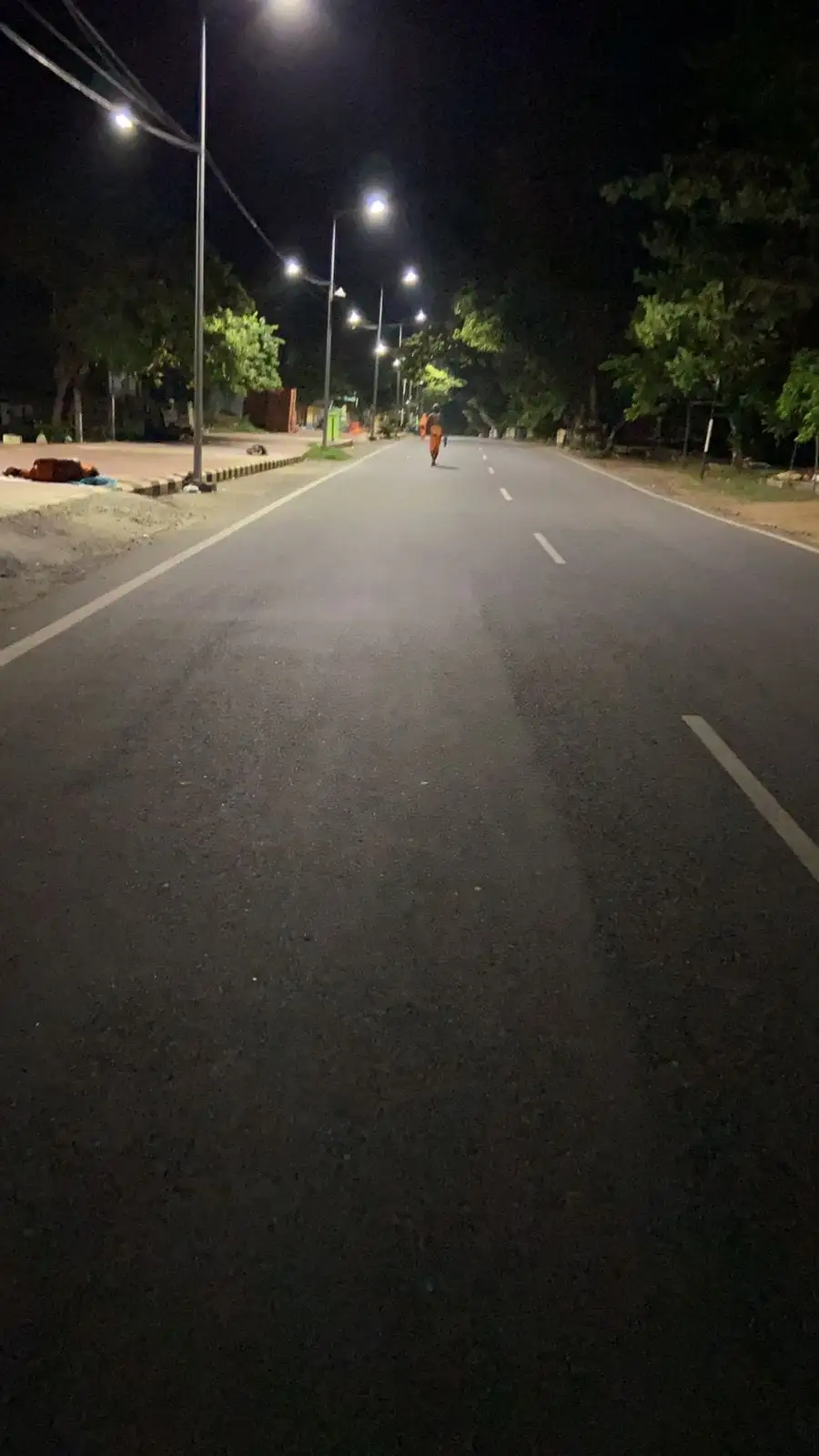 Maha ShivaratriMaha Shivaratri at Arunachaleswarar Temple: the 2027 date (6 March), the night-long worship and midnight Lingodbhava pooja, night Girivalam, and practical planning.