Ramana Maharshi and Arunachala
Ramana Maharshi arrived at Tiruvannamalai on 1 September 1896, aged sixteen, and never left. He lived first in the temple, then in caves on the hill, and from 1922 at the ashram that grew up at its foot, until his death in 1950. Here is the timeline, and where you can see each place today.

Timeline
Dates below follow the biographical summary on Wikipedia.
| Date | Where | What happened |
|---|---|---|
| 30 Dec 1879 | Tiruchuzhi, Tamil Nadu | Born Venkataraman |
| 1 Sept 1896 | Arunachaleswarar Temple | Arrives at Tiruvannamalai; first weeks in and around the thousand-pillared hall, including the Pathala Lingam vault |
| Feb 1897 – May 1898 | Gurumurtam | Lives at the Gurumurtam temple, then a nearby mango orchard |
| Sept 1898 | Pavalakkunru | Stays briefly at the Shiva temple on Pavalakkunru |
| Feb 1899 – 1916 | Virupaksha Cave | About 17 years on the south-eastern slope of Arunachala |
| 1916 – end of 1922 | Skandashram | Lives with his mother higher up the slope |
| 19 May 1922 | Foot of the hill | His mother, Alagammal, dies; her samadhi becomes the nucleus of the ashram |
| Dec 1922 – 1950 | Sri Ramanasramam | Lives at the ashram at the foot of the hill |
| 14 Apr 1950 | Sri Ramanasramam | Dies; his samadhi shrine is at the ashram |
His relationship with Arunachala
For Ramana Maharshi, Arunachala was not simply where he lived. He spoke of the hill as his Guru and as Shiva himself. Over the years he walked around it countless times and encouraged others to do Girivalam. He also wrote devotional hymns to it, the Five Hymns to Arunachala, discussed in the blog post Ramana Maharshi’s Five Hymns to Arunachala.
His teaching of self-enquiry (atma vichara), asking “Who am I?”, drew seekers from across India and the world. Many still come to Tiruvannamalai because of him.
Visiting the Ramana sites today
 Sri RamanasramamVisiting Sri Ramanasramam: location on Chengam Road, what to see (Old Hall, samadhi shrines, library), dress and etiquette, accommodation requests and nearby cave paths.
 Virupaksha CaveVirupaksha Cave on Arunachala's south-eastern slope, where Ramana Maharshi lived from 1899 to 1916: history, the walk up from Ramanasramam, what to expect and etiquette.
 SkandashramSkandashram on Arunachala, Ramana Maharshi's home from 1916 to 1922: history, the view over the temple, the walk up from Ramanasramam, and tips for visiting.
- Pathala Lingam: inside Arunachaleswarar Temple, beneath the thousand-pillared hall. See temple architecture.
- Gurumurtam and Pavalakkunru: smaller sites in and around town that some devotees visit. Ask locally for directions.
- Sri Ramanasramam: on Chengam Road at the southern foot of the hill; the footpath to Skandashram and Virupaksha Cave starts beside it.
Common questions
When did Ramana Maharshi come to Tiruvannamalai?
On 1 September 1896, at the age of sixteen. He stayed at or near Arunachala for the rest of his life.
Where did Ramana Maharshi live in Tiruvannamalai?
In the temple (including the Pathala Lingam vault) in 1896–97, at Gurumurtam from 1897 to 1898, at Virupaksha Cave from 1899 to 1916, at Skandashram from 1916 to 1922, and at Sri Ramanasramam from December 1922 until his death on 14 April 1950.
Is Ramana Maharshi's samadhi at Ramanasramam?
Yes. His samadhi shrine is at Sri Ramanasramam, at the southern foot of Arunachala on Chengam Road, and is open to visitors.
Sources & references
- Ramana MaharshiWikipediaReference work · checked27 September 2026
- Sri Ramanasramam – official websiteSri RamanasramamInstitution · checked27 September 2026
Please verify important timings and festival dates with official sources before travelling.
This is an independent informational guide, not the official temple website. For darshan tickets, sevas and donations, use the official HR&CE temple website.
Continue exploring Arunachala
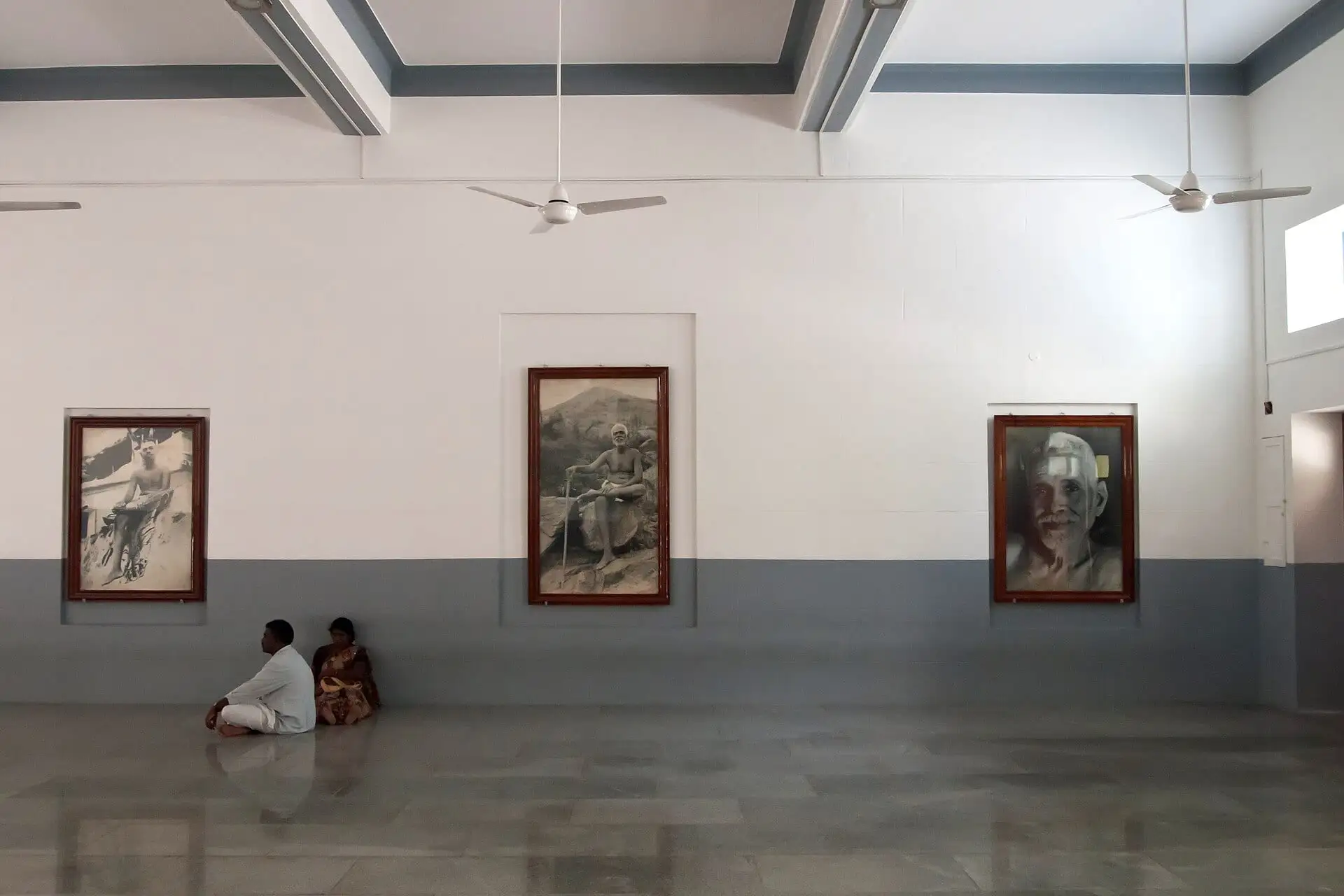 Sri RamanasramamVisiting Sri Ramanasramam: location on Chengam Road, what to see (Old Hall, samadhi shrines, library), dress and etiquette, accommodation requests and nearby cave paths.
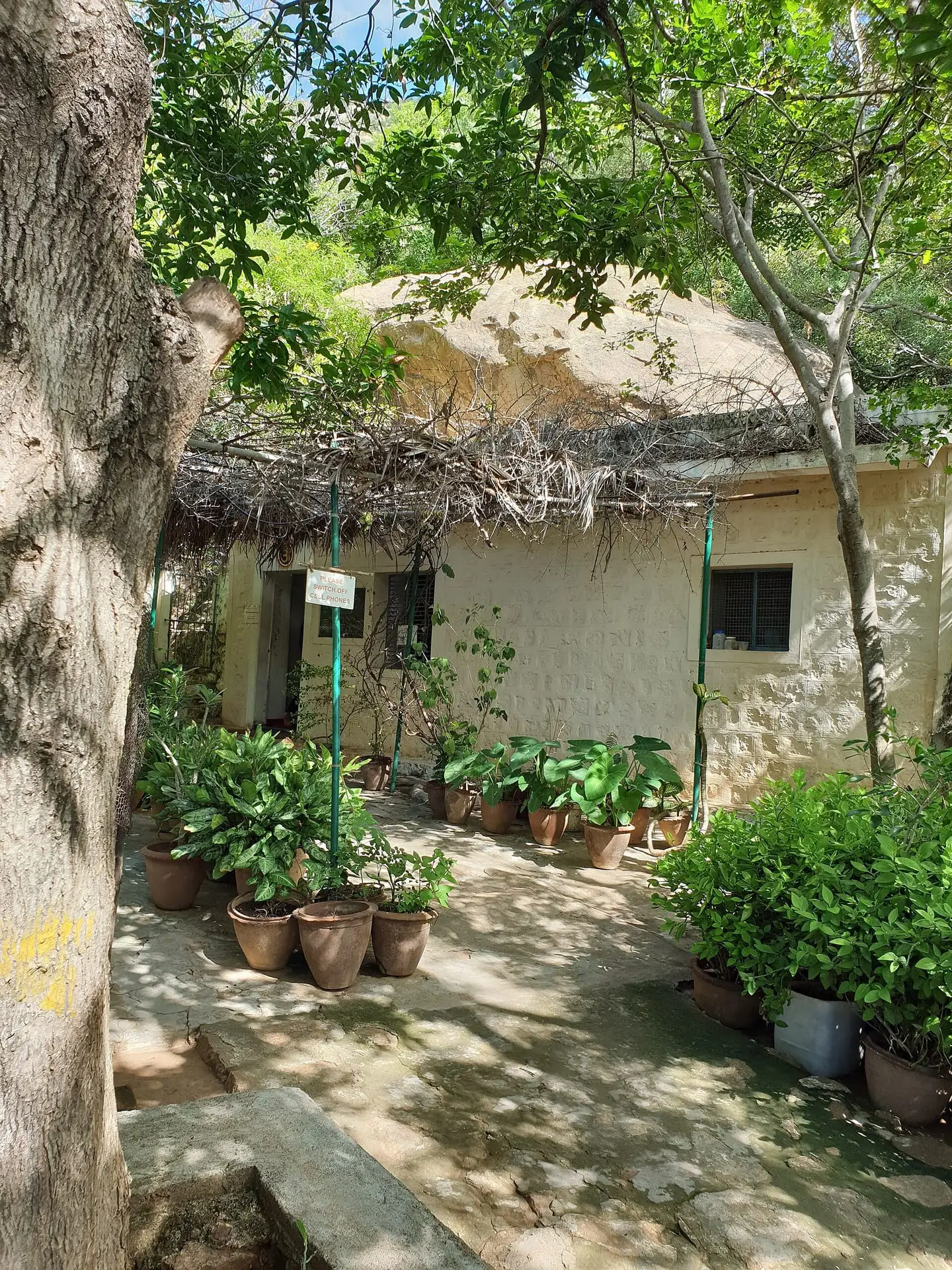 Virupaksha CaveVirupaksha Cave on Arunachala's south-eastern slope, where Ramana Maharshi lived from 1899 to 1916: history, the walk up from Ramanasramam, what to expect and etiquette.
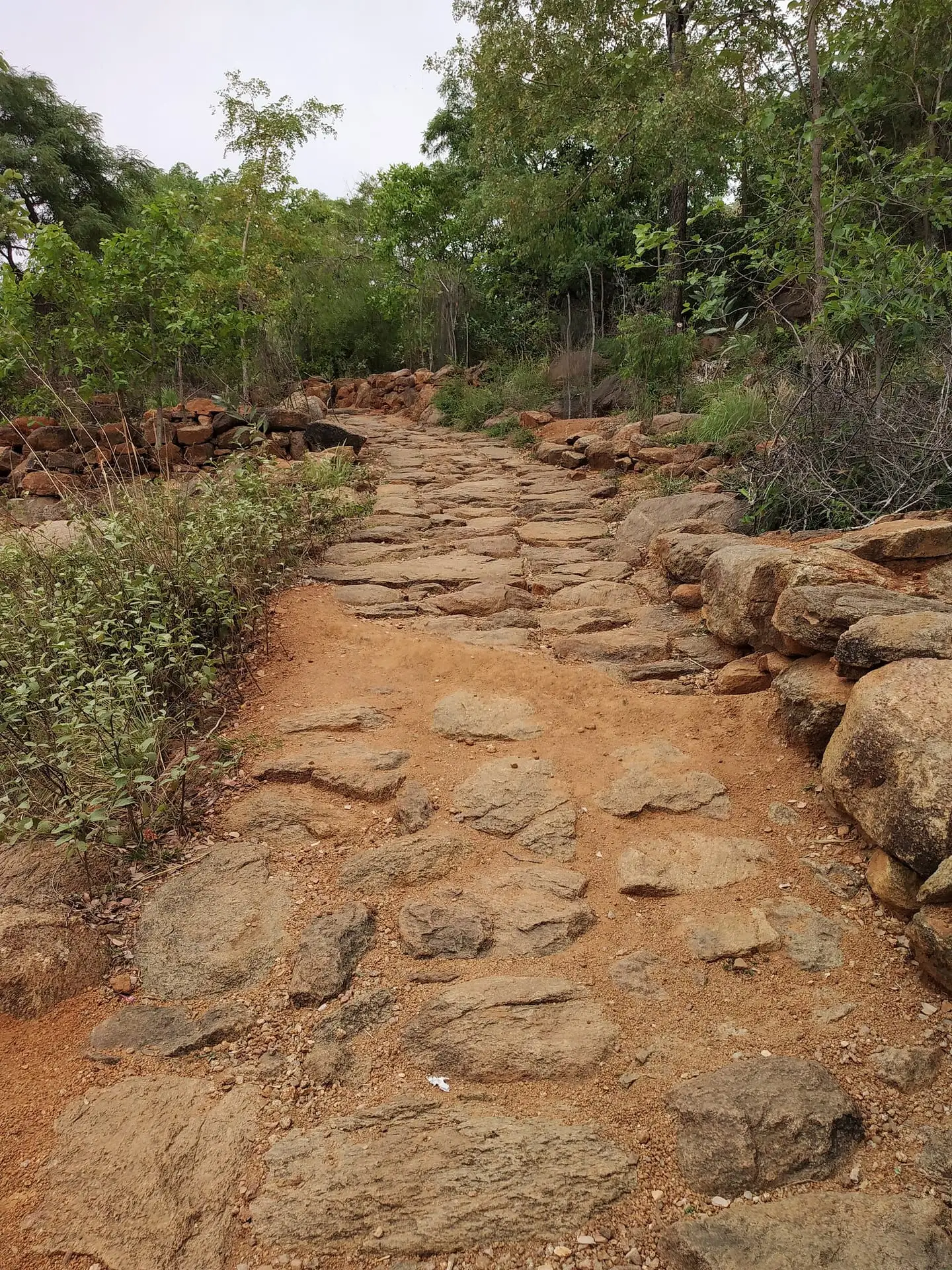 SkandashramSkandashram on Arunachala, Ramana Maharshi's home from 1916 to 1922: history, the view over the temple, the walk up from Ramanasramam, and tips for visiting.
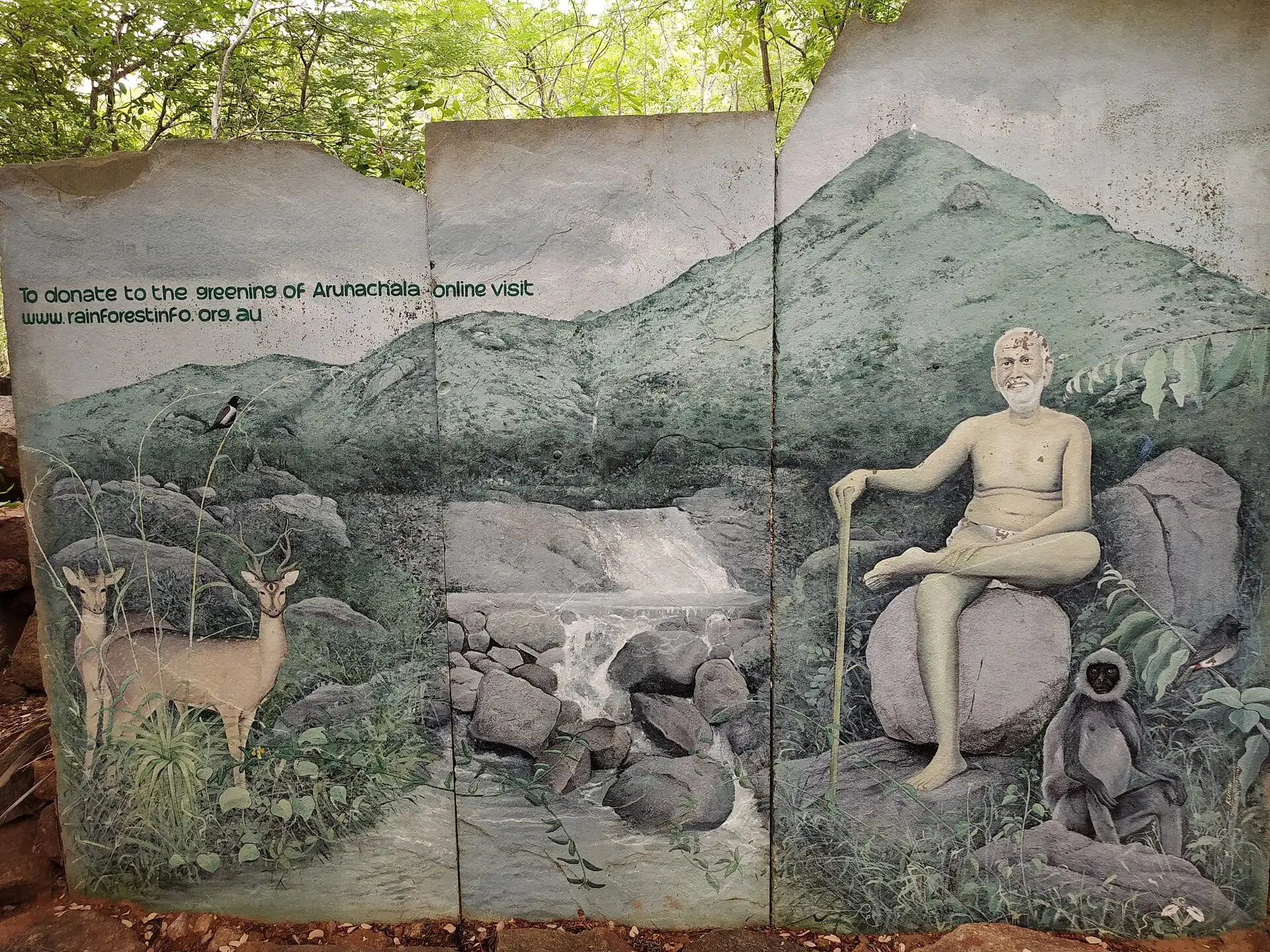 Ramana Maharshi's Five Hymns to ArunachalaAn introduction to the devotional hymns Ramana Maharshi addressed to the hill: what they are, when he wrote them, and where to read them.