Arunachala Hill
Arunachala is the hill that rises behind Arunachaleswarar Temple in Tiruvannamalai, about 814 m high. For devotees it is not just a sacred site but Shiva himself. This guide separates what is documented from what tradition holds, and explains how visitors experience the hill today.

Documented facts
| Height | About 814 m (2,671 ft) above sea level (Wikipedia) |
| Location | Tiruvannamalai, Tamil Nadu. The summit is north-west of the temple |
| Girivalam path | About 14 km around the hill (district administration) |
| Around the hill | “More than 350 tanks”, eight Nandis and several mandapams (district administration) |
| Vegetation | Dry deciduous forest; reforestation efforts since the 1990s (Wikipedia) |
| Names | Arunachala (Sanskrit, often explained as “red hill”); Annamalai (Tamil, “the unapproachable hill”) |
What tradition holds
- The hill is Shiva. According to the Arunachala tradition, Shiva appeared here as an endless column of fire to end a dispute between Brahma and Vishnu, and then took the form of this hill. This is the story remembered every year at Karthigai Deepam.
- Four ages, four forms. The temple’s official history page describes the hill as a mountain of fire in the Krita Yuga, of ruby in the Treta Yuga, of gold in the Dwapara Yuga, and of stone in the present Kali Yuga.
- Remembrance is enough. A Tamil Shaiva saying holds that birth at Tiruvarur, sight of Chidambaram, death at Kashi, and simply remembering Arunachala each grant liberation.
The full stories are on Legends of Arunachala.
Saints of Arunachala
The hill has drawn renunciates and poets for centuries. Among those associated with it:
- Virupaksha Deva, after whom Virupaksha Cave is named.
- Guhai Namashivaya, a 15th-century saint after whom a cave on the hill is named.
- Arunagirinathar, the 15th-century poet of the Thiruppugazh, born in Tiruvannamalai.
- Seshadri Swamigal, remembered at the Seshadri Swamigal Ashram.
- Ramana Maharshi (1879–1950), who lived on and around the hill for over fifty years. See Ramana Maharshi and Arunachala.
- Yogi Ramsuratkumar, whose ashram is on the Girivalam road.
Experiencing the hill
 Girivalam guideComplete Girivalam guide: what it is, the 14 km route around Arunachala, the 8 Lingams, how long it takes, Pournami timing, safety, and a walking-time calculator.
 Virupaksha CaveVirupaksha Cave on Arunachala's south-eastern slope, where Ramana Maharshi lived from 1899 to 1916: history, the walk up from Ramanasramam, what to expect and etiquette.
 SkandashramSkandashram on Arunachala, Ramana Maharshi's home from 1916 to 1922: history, the view over the temple, the walk up from Ramanasramam, and tips for visiting.
 Sri RamanasramamVisiting Sri Ramanasramam: location on Chengam Road, what to see (Old Hall, samadhi shrines, library), dress and etiquette, accommodation requests and nearby cave paths.
- Walk around it. Girivalam is the main way pilgrims honour the hill: 14 km, clockwise, traditionally barefoot.
- Visit the caves. A paved footpath from beside Sri Ramanasramam climbs to Virupaksha Cave and Skandashram, where Ramana Maharshi lived from 1899 to 1922.
- See the Maha Deepam. Each year at Karthigai Deepam a great flame is lit on the summit. See Maha Deepam.
Visiting responsibly
The hill is forest land with protected wildlife. Climbing to the summit is regulated and generally allowed only on specific occasions with passes, so don’t attempt it otherwise. On the permitted footpaths:
- go early, carry water, and leave nothing behind;
- stay on marked paths;
- keep quiet near the caves and shrines, as Sri Ramanasramam’s etiquette guide asks.
The hill on the map
The interactive map loads here. Every place is also listed below.
List of mapped places
- Arunachaleswarar Temple · open in Google Maps
- Arunachala Hill (summit, 814 m) · open in Google Maps
- Sri Ramanasramam · open in Google Maps
- Seshadri Swamigal Ashram · open in Google Maps
- Yogi Ramsuratkumar Ashram · open in Google Maps
- Virupaksha Cave · open in Google Maps
- Skandashram · open in Google Maps
- Tiruvannamalai railway station (TNM) · open in Google Maps
- Tiruvannamalai bus stand · open in Google Maps
- Tiruvannamalai New Bus Stand · open in Google Maps
- 1. Indra Lingam (East) · open in Google Maps
- 3. Yama Lingam (South) · open in Google Maps
- 4. Niruthi Lingam (South-west) · open in Google Maps
- 5. Varuna Lingam (West) · open in Google Maps
- 7. Kubera Lingam (North) · open in Google Maps
- Chandra Lingam · open in Google Maps
Common questions
What is Arunachala?
Arunachala is the sacred hill at Tiruvannamalai, Tamil Nadu, at whose eastern foot stands Arunachaleswarar Temple. In the Shaiva tradition the hill is regarded as a manifestation of Shiva as fire.
How high is Arunachala?
About 814 metres (2,671 ft) above sea level, according to Wikipedia.
Can you climb Arunachala hill?
The hill is forest land and climbing to the summit is regulated. It is generally allowed only on specific occasions, such as the day of the Maha Deepam, with passes issued in limited numbers. Footpaths to Virupaksha Cave and Skandashram on the lower slopes are open to visitors; check local notices for timings.
Why is Arunachala important?
Devotees traditionally regard Arunachala as Shiva himself, the fire that Brahma and Vishnu could not measure, which took the form of a hill. The Tamil Shaiva saying that remembering Arunachala grants liberation, and the teaching of Ramana Maharshi, have made it a place of pilgrimage for centuries.
Sources & references
- ArunachalaWikipediaReference work · checked27 September 2026
- Full Moon Day (Girivalam)Tiruvannamalai District AdministrationGovernment of Tamil Nadu · checked27 September 2026
- Temple history (sthala varalaru)HR&CE – Arunachaleswarar TempleOfficial temple source (HR&CE) · checked27 September 2026
- Ramana MaharshiWikipediaReference work · checked27 September 2026
- Etiquette around ArunachalaSri RamanasramamInstitution · checked27 September 2026
Please verify important timings and festival dates with official sources before travelling.
This is an independent informational guide, not the official temple website. For darshan tickets, sevas and donations, use the official HR&CE temple website.
Continue exploring Arunachala
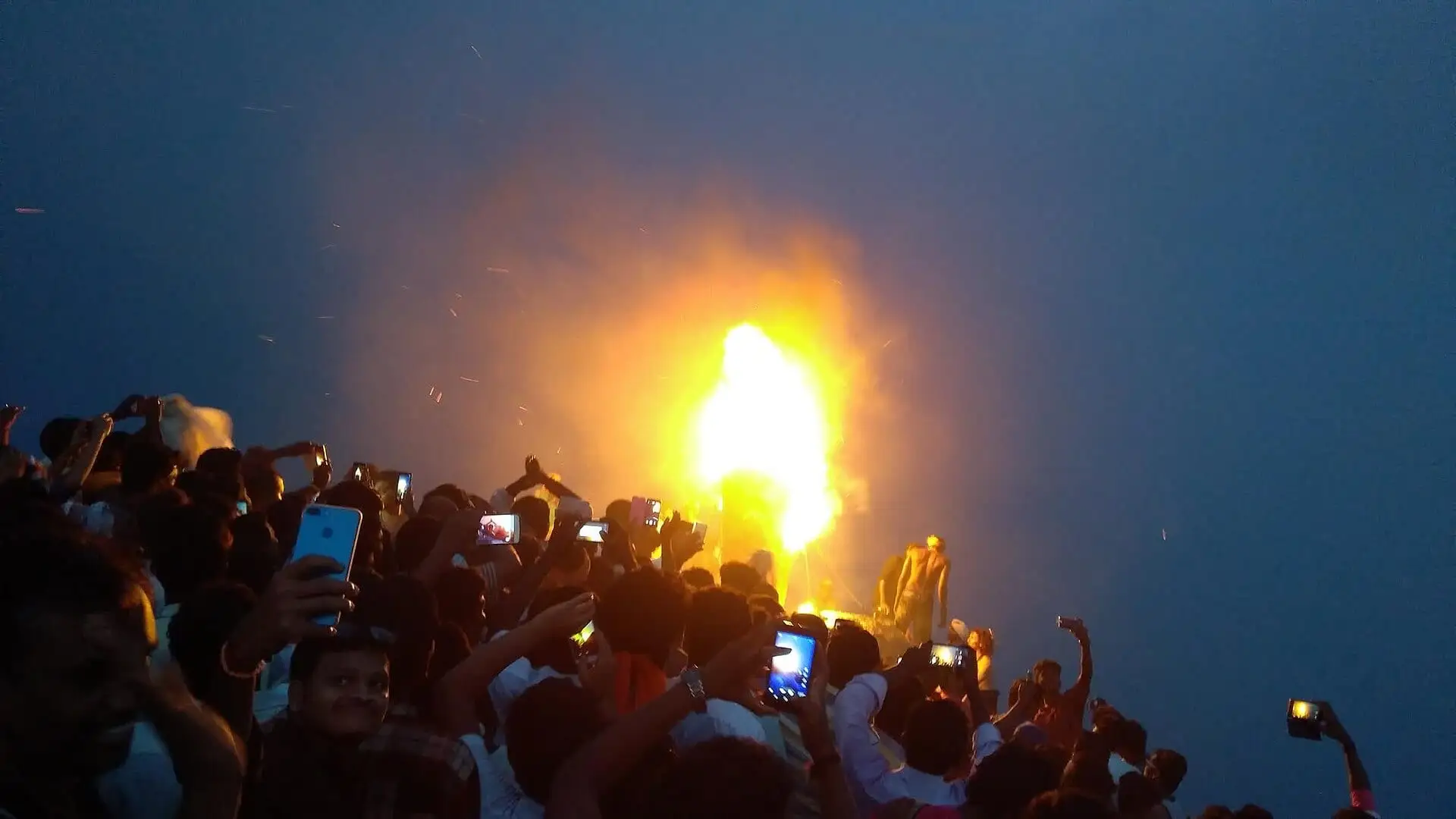 Legends of ArunachalaThe legends of Arunachala: Shiva's endless column of fire before Brahma and Vishnu, the ketaki flower, Parvati's penance and Ardhanarishvara.
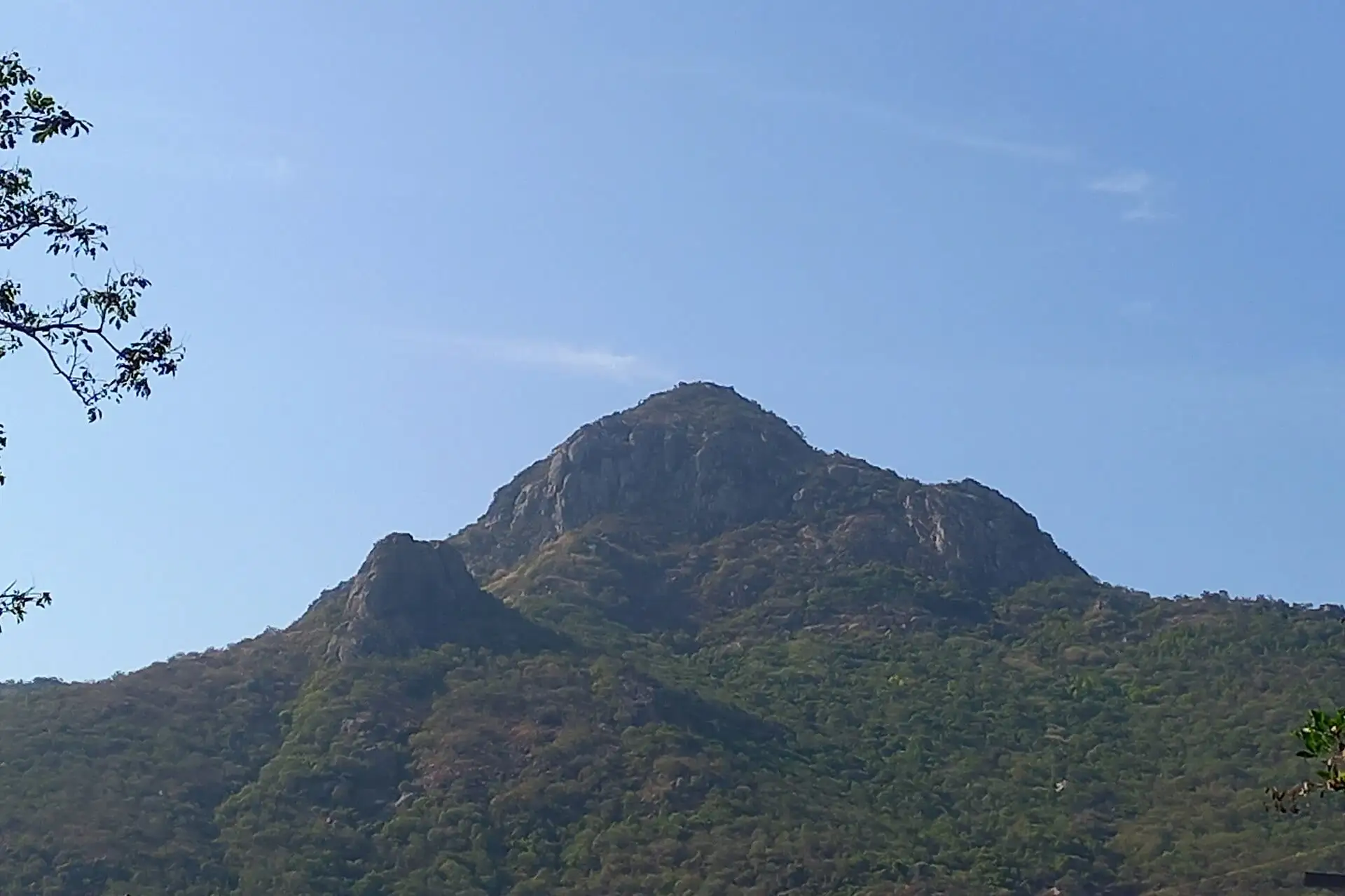 Girivalam guideComplete Girivalam guide: what it is, the 14 km route around Arunachala, the 8 Lingams, how long it takes, Pournami timing, safety, and a walking-time calculator.
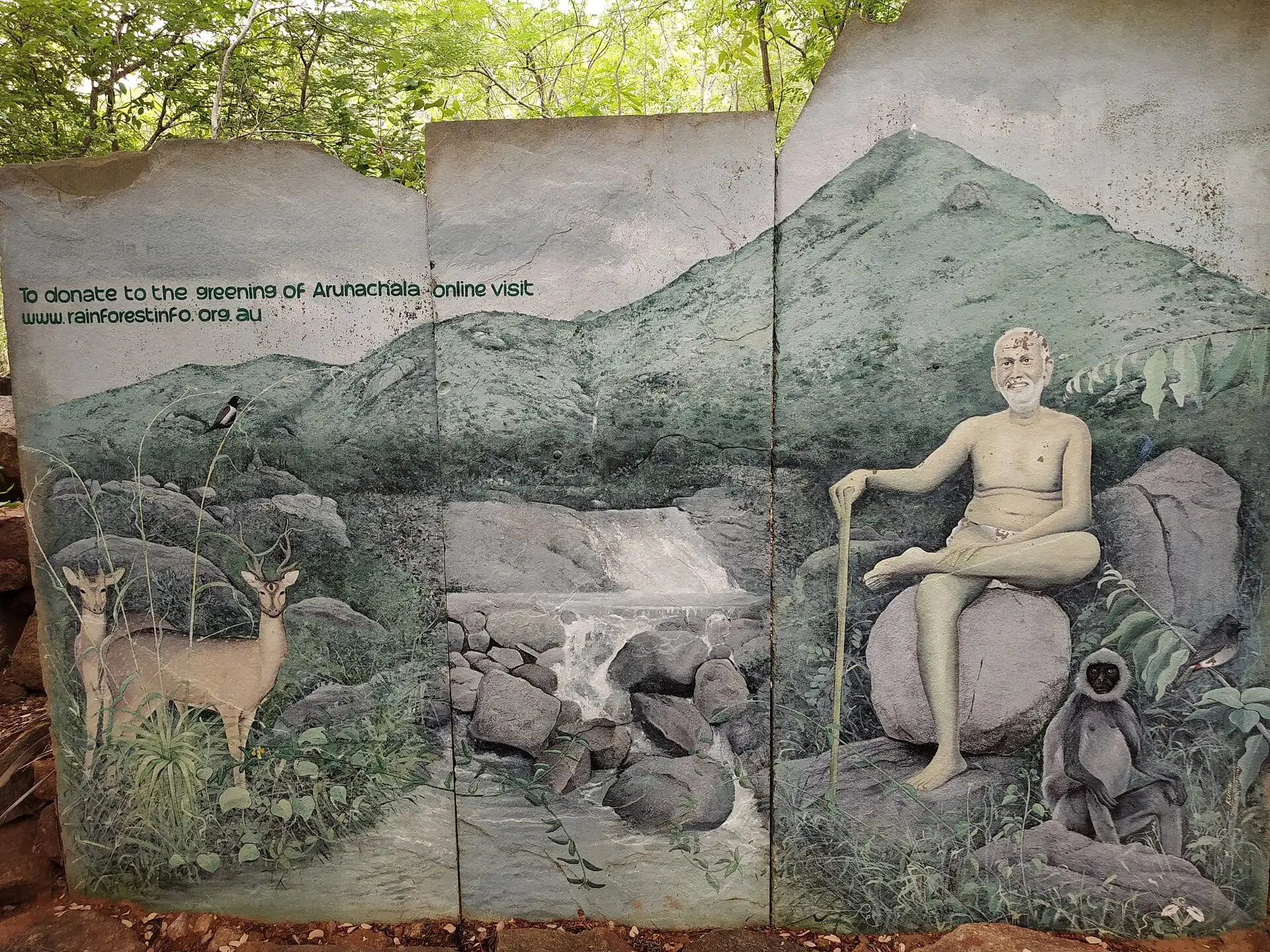 Ramana MaharshiRamana Maharshi's life at Tiruvannamalai from 1896 to 1950: the temple, Gurumurtam, Virupaksha Cave, Skandashram and Sri Ramanasramam, and how to visit each place today.
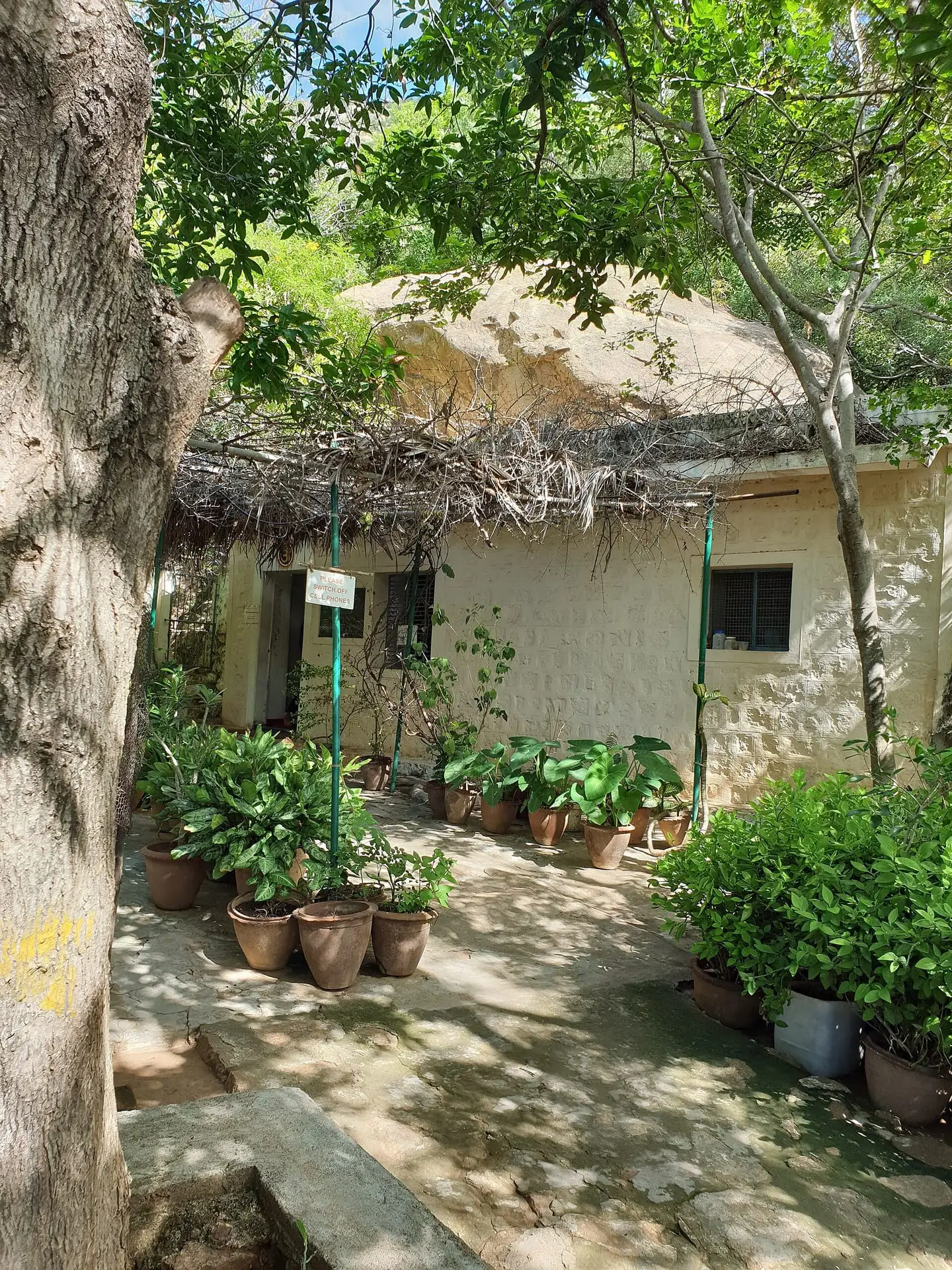 Virupaksha CaveVirupaksha Cave on Arunachala's south-eastern slope, where Ramana Maharshi lived from 1899 to 1916: history, the walk up from Ramanasramam, what to expect and etiquette.